Indian cuisine is one of the oldest, richest, and most diverse food traditions in the world. Yet, despite its global popularity, most common myths about Indian food continue to shape how people perceive it. These misconceptions often oversimplify a cuisine that spans thousands of years, hundreds of cultures, and countless regional styles.
From the idea that all Indian food is unbearably spicy to the belief that it’s unhealthy or only vegetarian, these myths don’t just misrepresent Indian food—they prevent many people from experiencing its true depth and beauty. In this in-depth guide, we’ll break down the most common myths about Indian food, explain where they come from, and uncover the real truth behind them.
Whether you’re new to Indian cuisine or someone who loves it already, this blog will help you understand Indian food in a more informed, respectful, and delicious way.
Myth 1: All Indian Food Is Extremely Spicy
One of the most common myths about Indian food is that every dish is overwhelmingly spicy and will set your mouth on fire.

The Reality
Indian food is not defined by heat—it’s defined by balance. While some dishes do use chilies for heat, many Indian meals are mild, aromatic, or even subtly sweet. Spices such as cumin, coriander, turmeric, cardamom, cloves, and cinnamon are used primarily for flavor and aroma, not spiciness.
In fact, heat levels in Indian cooking are adjustable. Most traditional recipes allow the cook to control spice intensity depending on personal preference. Creamy curries, lentil-based dals, and yogurt-based gravies are often mild and comforting.
Truth: Indian food can be spicy—but it doesn’t have to be.
Myth 2: Indian Food Is Unhealthy
Another one of the most common myths about Indian food is that it’s greasy, oily, and bad for your health.

The Reality
Traditional Indian food is actually rooted in nutrition and balance. Many meals include lentils, whole grains, vegetables, legumes, fermented foods, and healthy fats. Cooking methods like steaming, boiling, slow simmering, and sautéing are common.
Spices used in Indian cuisine are known for their functional benefits. Turmeric, ginger, garlic, cumin, and fennel have long been used in home cooking to support digestion and overall well-being.
The misconception usually comes from restaurant-style dishes, which may use extra butter, cream, or oil to enhance richness. Home-cooked Indian food, however, is often light, nourishing, and well-balanced.
Truth: Indian food can be incredibly healthy when prepared traditionally.
Myth 3: Indian Food Is Only Vegetarian
Many people assume that Indian cuisine is entirely vegetarian, making this one of the most common myths about Indian food.
The Reality
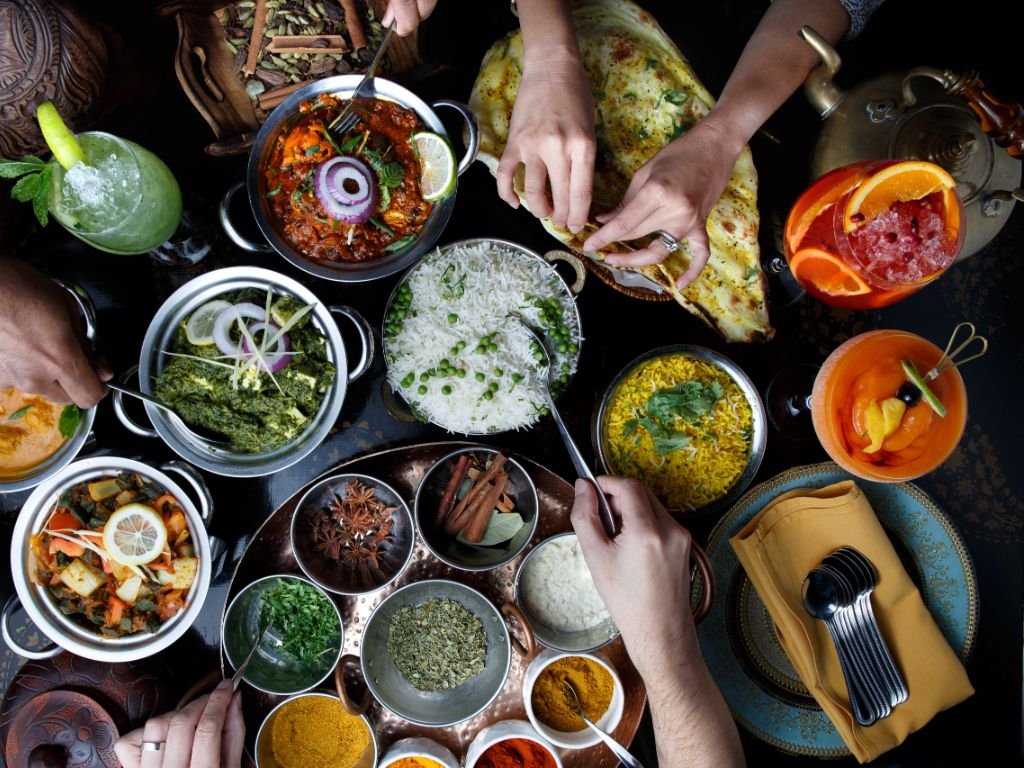
While India does have one of the world’s largest vegetarian populations, Indian cuisine includes a vast range of non-vegetarian dishes as well. Chicken, lamb, goat, fish, seafood, and eggs are integral parts of many regional cuisines.
Coastal regions are known for seafood-based dishes, while northern and central areas feature rich meat curries and grilled preparations. The diversity is immense, shaped by geography, climate, and cultural traditions.
Truth: Indian food includes both vegetarian and non-vegetarian dishes in equal richness.
Myth 4: Indian Food Is Just Curry
Calling all Indian dishes “curry” is one of the most common myths about Indian food, especially outside India.

The Reality
The word “curry” is a Western umbrella term that doesn’t accurately represent Indian cooking. Indian cuisine includes dry vegetable dishes, grilled meats, stir-fries, lentils, breads, rice dishes, snacks, and desserts—many of which don’t involve gravy at all.
Indian meals are structured around variety, not just sauces. A typical plate might include rice, bread, lentils, vegetables, pickles, yogurt, and chutneys—each with a unique texture and flavor.
Truth: Indian food is far more than just curry.
Myth 5: Indian Food Is Difficult to Cook
Many home cooks believe Indian food is too complicated, making this another of the most common myths about Indian food.

The Reality
While some festive or restaurant-style dishes can be elaborate, everyday Indian cooking is surprisingly simple. Many meals rely on basic techniques like tempering spices, pressure cooking lentils, or sautéing vegetables.
With a small collection of core spices and a few staple ingredients, you can prepare dozens of Indian dishes at home. Like any cuisine, practice and familiarity make it easier over time.
Truth: Indian food is approachable and beginner-friendly once you understand the basics.
Myth 6: Indian Food Is Always Heavy and Filling
A common belief—and one of the most common myths about Indian food—is that it’s always rich, heavy, and hard to digest.
The Reality
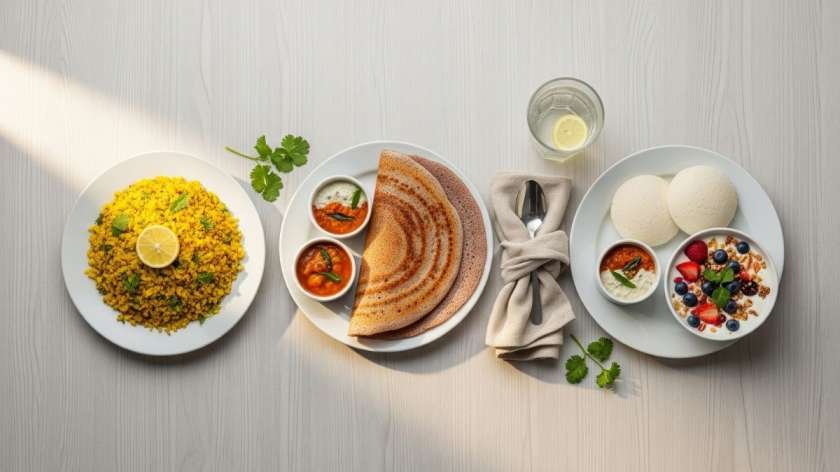
Indian cuisine includes a wide spectrum of light foods such as vegetable stir-fries, fermented batters, steamed dishes, soups, and yogurt-based preparations. Many traditional meals are designed to be satisfying without being overwhelming.
Portion size, cooking method, and ingredient balance matter. Heavy dishes exist, but they are usually reserved for celebrations, not everyday meals.
Truth: Indian food can be light, fresh, and easy on the stomach.
Myth 7: Indian Food Uses Too Many Spices
Some people think Indian food is “over-spiced,” which is one of the most common myths about Indian food.
The Reality
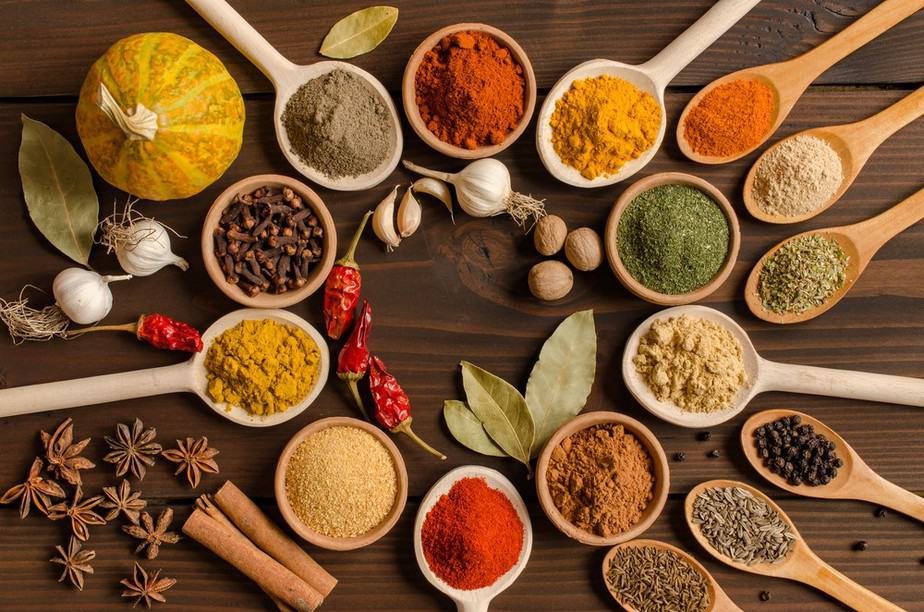
Indian cooking uses precise spice combinations, not random amounts. Each spice has a specific role—some add aroma, others depth, warmth, or balance. The goal is harmony, not excess.
Spices are layered throughout the cooking process, allowing flavors to develop gradually. When done right, no single spice overpowers the dish.
Truth: Indian food is thoughtfully spiced, not excessively spiced.
Myth 8: All Indian Food Tastes the Same
This stereotype is among the most common myths about Indian food, especially among people unfamiliar with regional diversity.
The Reality
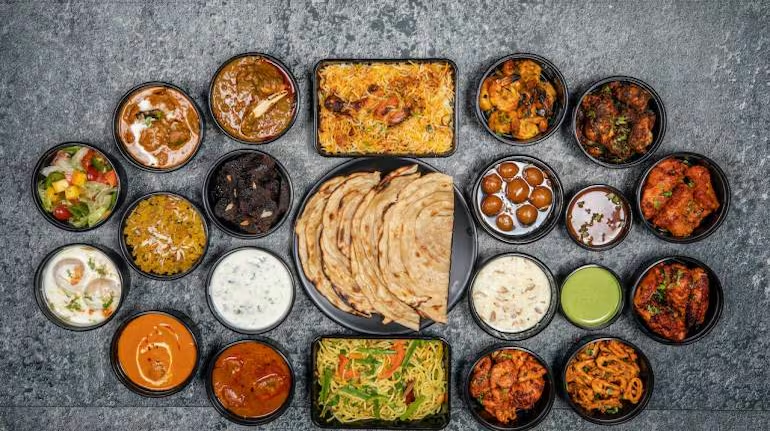
India’s food culture changes dramatically every few hundred kilometers. Climate, geography, local produce, and cultural influences shape each region’s cuisine. Some regions favor rice, others wheat. Some use coconut, others dairy. Some prefer tangy flavors, others mild or earthy ones.
This diversity means Indian food offers an endless variety of tastes, textures, and cooking styles.
Truth: Indian food is one of the most diverse cuisines on the planet.
Myth 9: Indian Food Is Not Kid-Friendly
Another misconception and one of the most common myths about Indian food is that children can’t enjoy it.
The Reality
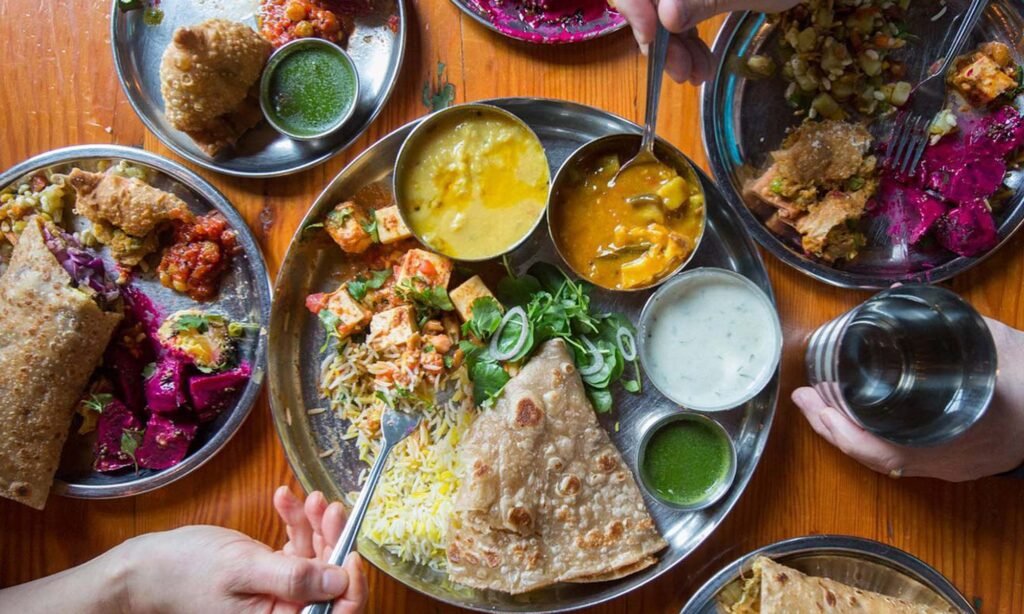
Many Indian dishes are naturally mild and comforting. Simple rice dishes, lentils, vegetable preparations, flatbreads, and yogurt-based meals are often favorites among children. Spice levels can always be adjusted, making Indian food adaptable for all ages.
Truth: Indian food can be very kid-friendly when prepared thoughtfully.
Myth 10: Indian Food Is Only About Tradition, Not Innovation
Some believe Indian cuisine is outdated, making this one of the most common myths about Indian food.
The Reality
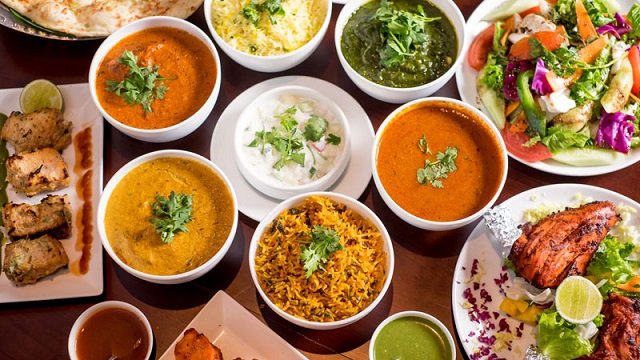
Indian food constantly evolves. Chefs and home cooks experiment with modern techniques, global ingredients, and creative presentations—while still respecting traditional foundations. From fusion dishes to plant-based innovations, Indian cuisine continues to adapt and inspire worldwide.
Truth: Indian food blends tradition with modern creativity.
Myth 11: Indian Desserts Are Too Sweet
People often assume Indian desserts are overwhelmingly sugary, adding to the most common myths about Indian food.
The Reality
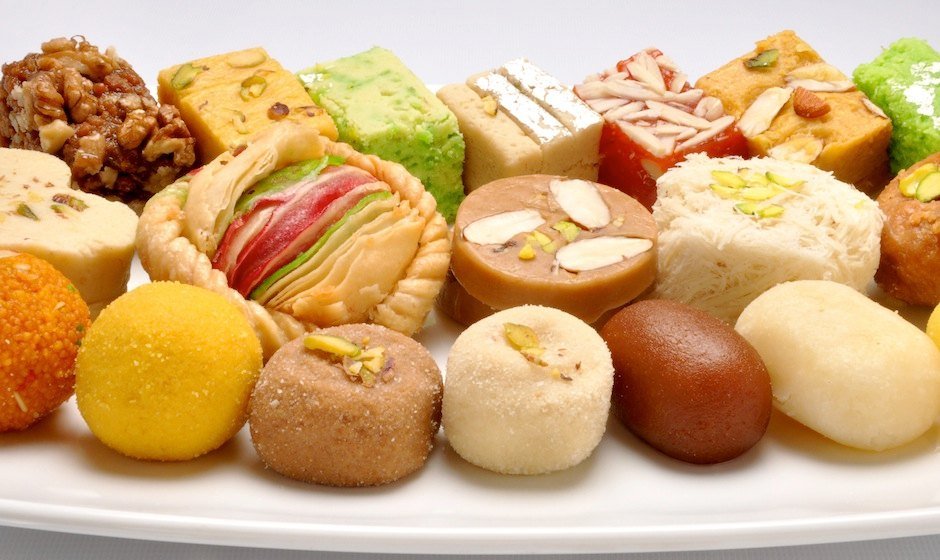
While some Indian sweets are rich, many are delicately flavored with cardamom, saffron, rose water, nuts, and milk. Portion sizes are usually small, and desserts are meant to be savored slowly. There is also a wide range of festive, regional, and seasonal sweets that vary greatly in texture and sweetness.
Truth: Indian desserts are diverse and nuanced, not just sugar-heavy.
Why These Myths About Indian Food Persist
The most common myths about Indian food exist largely because of limited exposure, oversimplified restaurant menus, and cultural misunderstandings. When a cuisine as vast as India’s is reduced to a few stereotypes, its complexity is easily lost.
Media portrayals, lack of regional representation, and unfamiliar ingredients also contribute to these misconceptions.
The Truth About Indian Food
Indian food is:
- Diverse and regionally rich
- Adaptable to different diets and preferences
- Rooted in balance and nutrition
- Both traditional and innovative
- Suitable for all ages and spice tolerances
Understanding the truth behind the most common myths about Indian food opens the door to a deeper appreciation of one of the world’s greatest culinary traditions.
Final Thoughts
The next time you hear someone repeat one of the most common myths about Indian food, you’ll know better. Indian cuisine isn’t just about spice or curry—it’s about history, culture, balance, and incredible variety.
By looking beyond the myths, you allow yourself to experience Indian food as it truly is: complex, comforting, exciting, and endlessly rewarding.
If you’re willing to explore with an open mind, Indian food will surprise you—in the best possible way. 🌶️🍛
Frequently Asked Questions (FAQs)
1. What are the most common myths about Indian food?
The most common myths about Indian food include that it’s always spicy, unhealthy, oily, and limited to curry or vegetarian dishes.
2. Is all Indian food spicy?
No. Many Indian dishes are mild and flavorful. Spices are used for taste and aroma, not just heat.
3. Is Indian food unhealthy?
Traditional Indian food is often nutritious, balanced, and made with lentils, vegetables, and whole grains.
4. Is Indian food only vegetarian?
No. Indian cuisine includes a wide variety of non-vegetarian dishes with chicken, fish, lamb, and seafood.
5. Does all Indian food taste the same?
Not at all. Indian food varies greatly by region, making it one of the most diverse cuisines in the world.



Leave a Reply